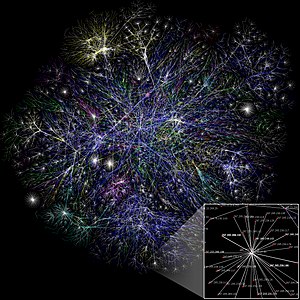
Visualization of the various routes through a portion of the Internet. From
'The Opte Project' The
Internet is a global system of interconnected
computer networks that use the standard
Internet Protocol Suite (TCP/IP) to serve billions of users worldwide. It is a
network of networks that consists of millions of private, public, academic, business, and government networks of local to global scope that are linked by a broad array of electronic and optical networking technologies. The Internet carries a vast array of
information resources and services, most notably the inter-linked
hypertext documents of the
World Wide Web (WWW) and the infrastructure to support
electronic mail.
Most traditional communications media, such as telephone and television services, are reshaped or redefined using the technologies of the Internet, giving rise to services such as
Voice over Internet Protocol (VoIP) and
IPTV. Newspaper publishing has been reshaped into
Web sites,
blogging, and
web feeds. The Internet has enabled or accelerated the creation of new forms of human interactions through
instant messaging,
Internet forums, and
social networking sites.
The origins of the Internet reach back to the 1960s when the United States funded research projects of its military agencies to build robust, fault-tolerant and distributed computer networks. This research and a period of civilian funding of a new U.S.
backbone by the
National Science Foundation spawned worldwide participation in the development of new networking technologies and led to the
commercialization of an international network in the mid 1990s, and resulted in the following popularization of countless applications in virtually every aspect of modern human life. As of 2009, an estimated quarter of Earth's population uses the services of the Internet.


